
AWARDS
Individual producers, Associations of producers, Cooperatives, Private estates, National research centres.
For each Edition, participating cacao-producing origins establish a National Organisation Committee that oversees the participation of cacao producers. Cacao bean producers interested in participating should contact their National Organisation Committee to learn about the national submission and selection process. Contact information is published on the Cacao of Excellence website as soon as the National Organisation Committees are confirmed.
Samples should be at least 7 kg of well-prepared, fermented, and dried cacao beans.
Cacao bean samples submitted to Cacao of Excellence can be of 2 categories:
▪ Commercial Samples – prepared by cacao producers from commercial farms or a group of farms, possible to reproduce the same quality cacao at commercial scale (several tons per year) in subsequent years.
▪ Experimental Samples – derived from interesting new varieties (newly selected varieties or materials with special quality traits) or through new post-harvest processes (e.g. novel fermentation method, etc.). These samples may not be available yet at commercial scale, but may become so within a few years’ time. These samples may be prepared by cacao farmers or by research institutes.
Selection is based on superior quality and consistency. Cacao beans must be carefully chosen for their exceptional quality and consistent characteristics. These can include the following:
- Harvested during the main harvesting season: Ideally, cacao beans should be harvested during the primary harvesting season to ensure optimal freshness and flavour.
- Processed to preserve and enhance flavour: The processing methods employed should aim to maintain and enhance the potential flavour development of the beans.
- Proper fermentation: Cacao beans should undergo proper fermentation, resulting in a balanced bitterness and astringency, with minimal presence of slaty beans.
- Optimal storage, packaging, and shipping conditions: From storage to packaging and transportation, every step should be executed under optimal conditions to preserve the quality of the beans.
- No additives during fermentation: It's crucial that no additional ingredients, such as flavour enhancers, fruit pulp, or juices, are introduced during the fermentation process, maintaining the purity of the cacao beans.
The selection and shipping of cacao bean samples to Cacao of Excellence is the responsibility of the National Organisation Committees. Once your NOC has approved your cacao sample to be submitted to Cacao of Excellencethey will be shipping the 7 Kg sample of well-prepared, fermented, and dried beans that you provided. Samples of less than 7 Kg sent to Cacao of Excellence will be rejected. Ensure that all bean samples are accompanied by the completed Excel Data Form, downloaded from www.cacaoofexcellence.org, with all information available on the sample and the producer. Ensure that a safety duplicate of 7 Kg of the same beans is in storage until the edition is completed. This is in case of damage, loss or any questions on bean quality.
The registration fee is 100 USD per sample. The registration fee includes the evaluation process, a detailed Feedback Report and promotion among cacao buyers, traders and chocolate makers across Cacao of Excellence promotion materials and events.
Producers should contact their NOC to learn about deadlines for submission of samples at the national level. Selected samples in each origin should then be shipped by NOCs as soon as November 1st 2026.
- The samples are evaluated first as whole beans including the aroma. Then a cut test is carried out and the beans characteristics recorded. The cut test aroma is evaluated and used to determine the optimal roasting conditions to enhance the flavour potential of the particular cacao sample.
- All accepted cacao samples are processed into cacao mass and evaluated (blindly) by the Technical Committee, a panel of international experts in cacao sensory evaluation, following the standards and methodology outlined in the Guide for the Assessment of Cacao Quality and Flavour and using the Cacao of Excellence evaluation form, flavour wheel and glossary. The quantitative data is analysed statistically and the Best 50 samples representing the four cacao-producing regions (i) Africa and the Indian Ocean, (ii) Asia and the Pacific, (iii) Central America and the Caribbean, and (iv) South America, are selected. These Best 50 cacao mass samples are then processed into a dark chocolate by the Cacao of Excellence Laboratory staff, utilising a uniform recipe for all.
The selected Best 50 cacao mass samples are processed into a dark chocolate with the same recipe and evaluated blindly by a Jury Panel of approximately 35 professionals, including Cacao of Excellence Technical Committee members and chocolate makers, bean buyers and experts in sensory evaluation.
The resulting quantitative sensory evaluation data is analysed to select the 2025 Cacao of Excellence Gold, Silver or Bronze Awards (honourable distinction, without money value) representing the four cacao-producing regions.
All cacao bean samples submitted are assigned a random code by Cacao of Excellence ensuring that the entire process is carried out blindly and that no information about origins or regions is communicated to those involved in the evaluation and to anybody before the Awards are celebrated.
From the initial coordination with the NOC to the culminating Award ceremony, the process spans approximately 19 months.
All forms can be found on the Cacao of Excellence “General Tools and Resources” webpage.
Following the Awards celebrations, individual and confidential Feedback Reports are sent to all participating producers. The report includes the results of the evaluation of the physical bean qualities, the liquor sensory evaluation and in the case of the Best 50, the chocolate sensory evaluation. The detailed feedback can be useful to producers when interacting with potential bean buyers and chocolate makers. For samples with defects, recommendations may be provided when identified to a specific post-harvest process.
In a typical Awards process, you should expect the Best 50 results to be posted clearly on our website when the results become available. This date may change, depending on cacao processing times and we will inform participants in email and via our communication channels (social media) on the release of Best 50 results, with every Edition.
The Gold, Silver and Bronze winners will be revealed at during Regional Awards Ceremonies during the course of a day. The Ceremony date is dependent on processing and evaluation duration. We will announce the precise date of the live and virtual ceremony with enough time to ensure that as many producers and their supporters as possible can attend the event in-person.
Eligibility and Participation
Individual cacao producers, cooperatives, farmer organisations, private estates and national cacao research centres can articipate through their country’s National Organisation Committee (NOC), which coordinates national sample collection and selection.
No. All submissions must be coordinated and validated by the NOC to ensure traceability, compliance with post-harvest protocols, and national representation.
Countries participating for the first time can work with Cacao of Excellence to establish an NOC and follow the onboarding process for new origins
For each Edition, participating cacao-producing origins establish a National Organisation Committee that oversees the participation of cacao producers. Cacao bean producers interested in participating should contact their National Organisation Committee to learn about the national submission and selection process.
How can I find out if my country has a National Organisation Committee?
For each Edition, National Organisation Committee contact information is published on the Cacao of Excellence website as soon as the National Organisation Committees are confirmed.
If a National Organisation Committee is not yet in place, our team provides guidance so that producers can participate on an equal footing with other origins. Please reach out to Andrew Meter at A.Meter@cgiar.org to learn more.
Samples should be at least 7 kg of well-prepared, fermented, and dried cacao beans.
Cacao bean samples submitted to Cacao of Excellence can be one of 2 categories:
- Commercial Samples – prepared by cacao producers from commercial farms or a group of farms, possible to reproduce the same quality cacao at commercial scale (several tonnes per year) in subsequent years.
- Experimental Samples – derived from interesting new varieties (newly selected varieties or materials with special quality traits) or through new post-harvest processes (e.g. novel fermentation method, etc.). These samples may not be available yet at commercial scale, but may become so within a few years’ time. These samples may be prepared by cacao farmers or by research institutes.
Selection is based on superior quality and consistency. Cacao beans must be carefully chosen for their exceptional quality and consistent characteristics. These can include the following:
- Harvested during the main harvesting season: Ideally, cacao beans should be harvested during the primary harvesting season to ensure optimal freshness and flavour.
- Processed to preserve and enhance flavour: The processing methods employed should aim to maintain and enhance the potential flavour development of the beans.
- Proper fermentation: Cacao beans should undergo proper fermentation, resulting in a balanced bitterness and astringency, with minimal presence of slaty beans.
- Optimal storage, packaging, and shipping conditions: From storage to packaging and transportation, every step should be executed under optimal conditions to preserve the quality of the beans.
- No additives during fermentation: It's crucial that no additional ingredients, such as flavour enhancers, fruit pulp, or juices, are introduced during the fermentation process, maintaining the purity of the cacao beans.
The selection and shipping of cacao bean samples to Cacao of Excellence is the responsibility of the National Organisation Committees. Once your NOC has approved your cacao sample to be submitted to Cacao of Excellence they will be shipping the 7 Kg sample of well-prepared, fermented, and dried beans that you provided. Samples of less than 7 Kg sent to Cacao of Excellence will be rejected. Ensure that all bean samples are accompanied by the completed Excel Data Form, downloaded from www.cacaoofexcellence.org, with all information available on the sample and the producer. Ensure that a safety duplicate of 7 Kg of the same beans is in storage until the edition is completed. This is in case of damage, loss or any questions on bean quality.
The registration fee is 100 USD per sample. The registration fee includes the evaluation process, a detailed Feedback Report and promotion among cacao buyers, traders and chocolate makers across Cacao of Excellence promotion materials and events.
Producers should contact their NOC to learn about deadlines for submission of samples at the national level. Selected samples in each origin should then be shipped by NOCs by the deadline communicated on the Cacao of Excellence website.
- The samples are evaluated first as whole beans including the aroma. Then a cut test is carried out and the beans characteristics recorded. The cut test aroma is evaluated and used to determine the optimal roasting conditions to enhance the flavour potential of the particular cacao sample.
- All accepted cacao samples are processed into cacao mass and evaluated (blindly) by the Technical Committee, a panel of international experts in cacao sensory evaluation, following the standards and methodology outlined in the Guide for the Assessment of Cacao Quality and Flavour and using the Cacao of Excellence Evaluation Form, Flavour Wheel and Glossary. The quantitative data is analysed statistically and the BEST 50 samples representing the four cacao-producing regions (i) Africa and the Indian Ocean, (ii) Asia and the Pacific, (iii) Central America and the Caribbean, and (iv) South America, are selected. These Best 50 cacao mass samples are then processed into a dark chocolate by the Cacao of Excellence Laboratory staff, utilising a uniform recipe for all.
The selected Best 50 cacao mass samples are processed into a dark chocolate with the same recipe and evaluated blindly by a Jury Panel of approximately 35 professionals, including Cacao of Excellence Technical Committee members and chocolate makers, renowned tasters, bean buyers and experts in sensory evaluation.
The resulting quantitative sensory evaluation data is analysed to select the 2025 Cacao of Excellence Gold, Silver or Bronze Awards (honourable distinction, without money value) representing the four cacao-producing regions.
All cacao bean samples submitted are assigned a random code by Cacao of Excellence ensuring that the entire process is carried out blindly and that no information about origins or regions is communicated to those involved in the evaluation and to anybody before the Awards are celebrated.
From the initial coordination with the NOC to the culminating Award ceremony, the process spans approximately 19 months.
All forms can be found on the Cacao of Excellence website webpage “Resources” - “Tools for Sensory Evaluation”.
Following the Awards celebrations, individual and confidential Feedback Reports are sent to all participating producers. The report includes the results of the evaluation of the physical bean qualities, the liquor sensory evaluation and in the case of the BEST 50, the chocolate sensory evaluation. The detailed feedback can be useful to producers when interacting with potential bean buyers and chocolate makers. For samples with defects, recommendations may be provided when identified to a specific post-harvest process.
According to recent 2023 and 2025 Awards Editions, BEST 50 results are typically posted on our website in July/August. This date may change, depending on cacao processing times and we will inform participants in email and via our communication channels on any changes to the date.
The Gold, Silver and Bronze winners are revealed at the Awards Ceremony. Producers will know whether they are part of the BEST 50, but it is only at the Awards Ceremony where producers and the world discover which of those BEST 50 recieve the Gold, Silver or Bronze distinction. The Ceremony is typically scheduled in February of the proceeding Awards’ year (ie. The 2025 Edition is celebrated at the Chocoa Trade Fair in February 2026) and this date is dependent on the duration of chocolate processing and the Jury’s BEST 50 chocolate evaluation. We will announce the precise date of the live and virtual ceremony with enough time to ensure that as many producers and their supporters as possible can attend the event in-person.
Laboratory and Training
Our trainings are open to a wide range of cacao and chocolate professionals, including producers, cooperatives, post-harvest technicians, sensory panelists, researchers, industry experts, chocolatiers, entrepreneurs, and institutional or governmental representatives. Whether you are new to cacao quality or looking to deepen your expertise, you are welcome.
Most trainings are held at the Cacao of Excellence R&D Laboratory and Training Centre within the Citta del Ciocclato Museum in Perugia, Italy. Trainings are open on a rolling-basis, dependent on Laboratory needs and research scheduling. Open calls for trainees are posted on our website and social media pages. To keep informed sign up to our newsletter for updates on open calls.
We can also deliver selected courses for partner institutions and within cacao-producing countries, as part of special collaboration and partnership between interested parties. We train national panels, as well as corporate entities such as Barry Callebaut, and Casa Luker, amongst others. Training in Cacao of Excellence protocols helps strengthen the use of a common language across the entire value chain.
A Certification Programme is currently under development. It will support the establishment of standardised quality systems across the cacao sector, strengthening national and international capacities and global alignment around a common language in cacao. For more information please reach out to Andrew Meter A.Meter@cgiar.org.
Yes. We offer tailored programmes designed to meet the needs of cooperatives, national bodies, NGOs, universities, laboratories, and industry partners. Custom content, duration and technical depth can be adjusted. If your entity is interested, please reach out to Andrew Meter, at A.Meter@cgiar.org.
Trainings can be delivered in English, Spanish and French, with the possibility of interpretation or bilingual support depending on the programme and location.
You can sign up to learn when a training session comes up by registering to our newsletter here.
Upcoming training dates and application details are also published on our website and social media channels.
We offer invitation letters to support visa applications, but participants are responsible for travel and accommodation arrangements. We can provide guidance on housing options in Perugia.
Partnerships & Collaboration
We welcome collaboration with chocolate makers, brands, development organisations, national institutions, donors, and research entities. Partnership opportunities include:
- Sponsorship of activities, Awards, trainings or innovation projects
- Joint training programmes and capacity-building initiatives
- Co-development of research, quality evaluation tools and technical standards
- Support for national cacao quality systems and laboratory strengthening
- Contribution to producer outreach, visibility and market access initiatives
If your organisation is committed to improving cacao quality, transparency and sustainability, we are happy to explore tailored collaboration models.
Yes. We partner with ministries, research institutes, extension services and national cacao organisations to strengthen post-harvest practices, sensory evaluation systems, and national quality strategies.
Absolutely. We offer sponsorship options for:
- The Cacao of Excellence Awards
- Training programmes and certification
- Research and innovation projects
- The Seguine Cacao Auction
- National capacity development activities
We work closely with partners to align impact goals and ensure meaningful visibility.
Yes. The Cacao of Excellence Programme actively collaborates with universities, laboratories, and scientific networks to advance cacao quality research, post-harvest science and sensory methodologies.
You can contact the Cacao of Excellence team N.Villasenor@cgiar.org. We encourage organisations to share their objectives so we can explore suitable collaboration pathways.
Subscribe to our newsletter, follow our social media channels, or visit our website regularly for updates on upcoming activities, calls for collaboration, and programme news.
Latest News
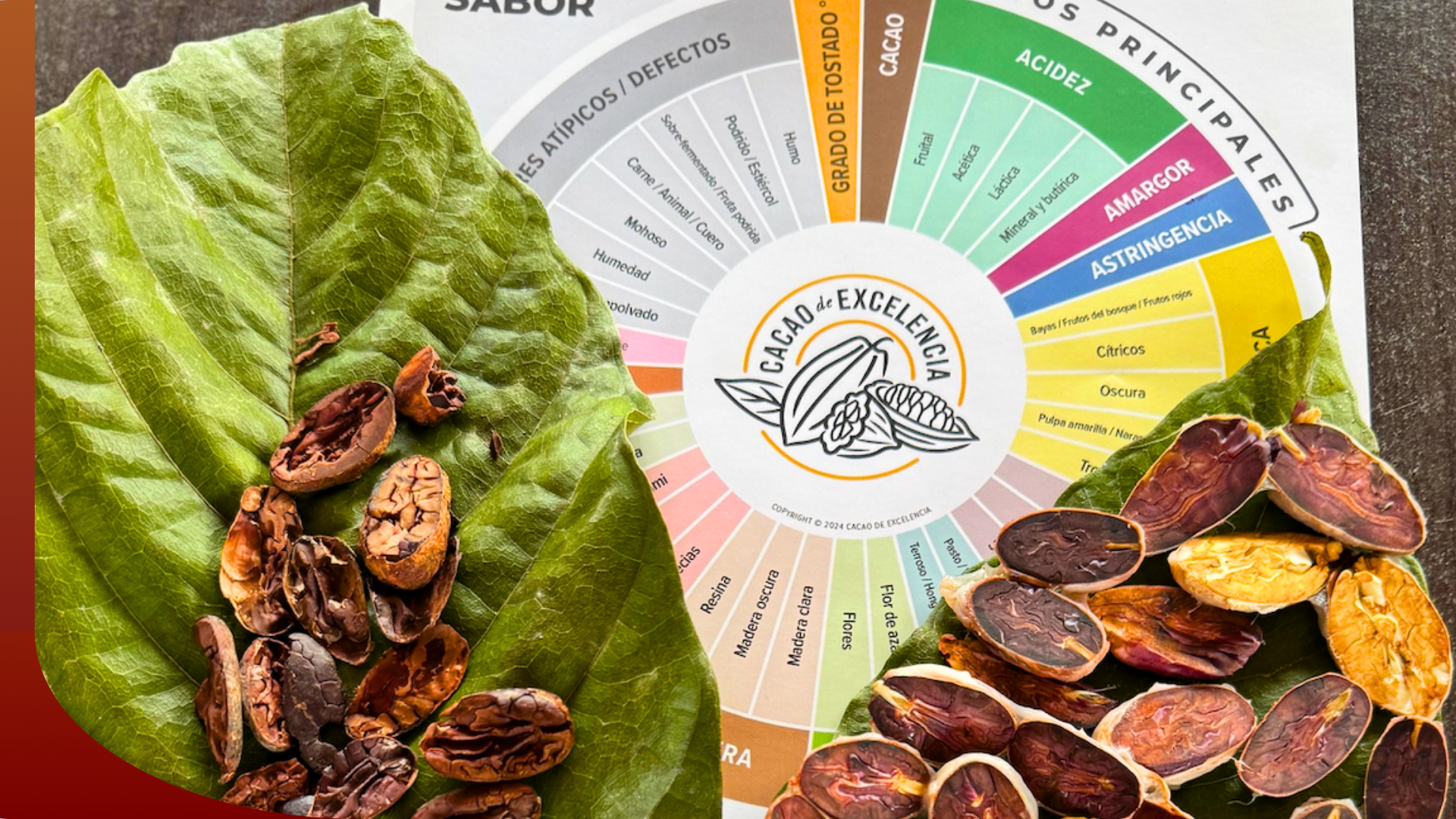
First Cacao of Excellence Core Training in Sensory Evaluation to be Held at the CoEx R&D Lab
The first Cacao of Excellence (CoEx) Core Training in Sensory Evaluation will take place in October 2026 at… [+ more]
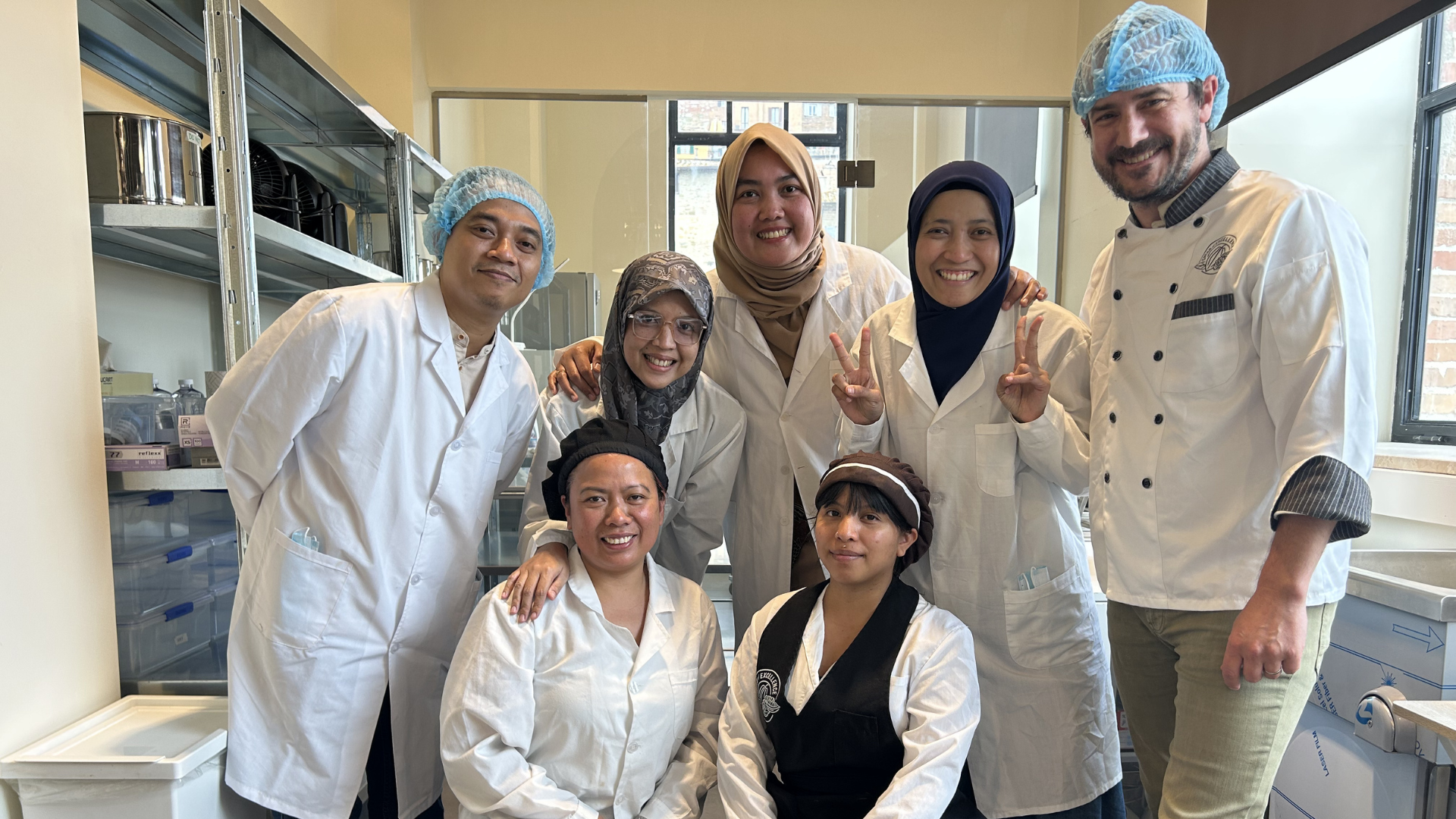
Indonesian Researchers Strengthen Capacity Around Cacao Flavour Evaluation and Quality Assessment
As cacao-producing countries increasingly seek to strengthen their own capacity around flavour evaluation, processing innovation and quality… [+ more]